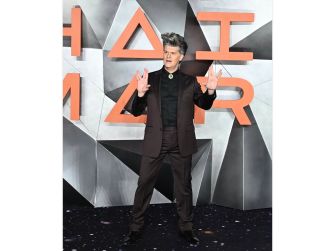
Rocky, the alien at the center of “Project Hail Mary,” has quickly become one of the film’s most talked-about characters, and the performance behind it is now entering the Oscars race, with puppeteer and performer James Ortiz eligible for consideration in the supporting actor category.
In the film, Rocky operates as the emotional counterweight to Ryan Gosling’s astronaut, shaping the story through dialogue, timing, and interaction rather than visual expression. The character’s presence is built through live puppetry and voice, allowing scenes to play out in real time rather than being constructed later with effects.
Placing that work in an acting category highlights a structural gap in how awards bodies define performance. Roles built through puppetry, motion capture, or voice rely on the same control and responsiveness as traditional acting, but they have not consistently been recognized within those categories.
Under current Academy rules, Ortiz’s work qualifies for Oscar consideration. The Screen Actors Guild also recognizes puppeteers within its acting branch, supporting eligibility for peer-voted awards. Other organizations apply different standards. The Golden Globes do not include this type of performance in acting categories, while the Critics Choice Awards and BAFTA have allowed more flexibility in comparable cases.
The Academy has previously created space for work that did not fit existing categories. The Special Achievement Award, introduced in the 1970s, was used to recognize contributions that combined technical innovation with performance.
One example is Star Wars, where sound designer Ben Burtt created the voice and personality of R2-D2, a contribution that functions as both sound design and character performance. The Academy last used the award for Toy Story, recognizing a shift in animation before a dedicated category was introduced.
Earlier debates around performance recognition surfaced with Andy Serkis’s motion capture work in The Lord of the Rings: The Two Towers and Rise of the Planet of the Apes, as well as voice performances by Robin Williams in Aladdin and Scarlett Johansson in Her. Recognition has varied across awards bodies, even as these performances became central to their films.
“Project Hail Mary” approaches the question through direct interaction. Scenes between Gosling and Rocky were rehearsed before the puppet was introduced, establishing timing and response in the same way two actors would prepare a scene. The character’s presence is shaped through that exchange rather than constructed entirely in post-production.
Amazon MGM Studios has confirmed it will submit Ortiz for Best Supporting Actor as part of its awards campaign for the film.