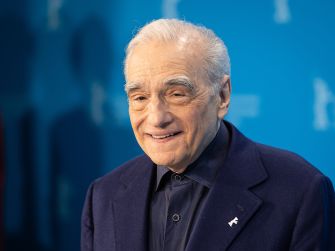
Martin Scorsese has joined a growing list of major Hollywood filmmakers embracing artificial intelligence, revealing that he used AI-generated images during the pre-production process for his upcoming film, What Happens at Night.
The Oscar-winning director’s involvement became public this week after artificial intelligence company Black Forest Labs announced that Scorsese had joined the startup as a partner and adviser. The announcement was accompanied by a promotional video showing the filmmaker using the company’s image-generation tool, Flux, while developing visual concepts for his next feature.
According to materials released by the company, Scorsese used the software to help create storyboard imagery during the planning stages of What Happens at Night, a forthcoming drama starring Leonardo DiCaprio and Jennifer Lawrence. The film follows a couple who travel to a small European town to adopt a child, and the demonstration showed Scorsese generating images to visualize the setting and atmosphere of the story before filming began.
The filmmaker said his interest in the technology stems from its potential as a creative tool rather than a replacement for traditional filmmaking techniques.
“I’m interested in the intersection of technology and storytelling, and seeing how that can push the bounds of creativity to create deeper and richer experiences for audiences,” Scorsese said in a statement released alongside the announcement. “Remember, cinema is a young medium, only around 125 years old, so we have to be open to how it can evolve.”
While the revelation immediately generated discussion online, Scorsese emphasized that his use of artificial intelligence was limited to the storyboarding process, a stage of production where filmmakers create visual references to communicate ideas for camera angles, locations, and sequences before filming begins.
For decades, Scorsese has been known for creating detailed storyboards and visual references to help guide productions. In his statement, he described AI as a tool that helped solve a longstanding challenge faced by filmmakers: translating images from imagination into something a production team can immediately understand.
“There’s always been this problem of how do you communicate what you see in your head to your cast and crew,” Scorsese said.
According to the director, Flux allowed him to create visual representations of ideas more quickly and efficiently, making it easier to communicate concepts to collaborators during pre-production. He described the process as “creatively freeing” and said the technology helped accelerate development without compromising the artistic goals of the project.
Scorsese also argued that the tool could provide practical benefits by reducing costs and shortening certain stages of production planning.
The announcement arrives at a time when artificial intelligence remains one of the most divisive topics in the entertainment industry. The use of AI-generated imagery, writing tools, and performance technologies has become a major point of contention across Hollywood, with many actors, writers, and filmmakers expressing concerns about the long-term impact on creative professions.
During the 2023 labor strikes, artificial intelligence emerged as one of the central issues in negotiations between studios and unions. Since then, debate over the technology has only intensified as AI tools have become increasingly sophisticated and accessible.
Many artists continue to view the technology with skepticism. Earlier this year at the Cannes Film Festival, filmmaker Guillermo del Toro criticized the growing belief that artistic expression could be reduced to automated software, dismissing the idea that meaningful art could be created through “a fucking app.”
Several prominent filmmakers have publicly embraced AI as a tool that can assist rather than replace traditional creative work.
James Cameron currently serves on the board of Stability AI, one of the industry's leading artificial intelligence companies. The filmmaker has argued that AI could eventually help reduce production costs while supporting visual effects work. Meanwhile, Lord of the Rings director Peter Jackson has also incorporated AI-assisted technology into various projects and previously compared its role in filmmaking to the introduction of special effects technologies in earlier generations.
Black Forest Labs itself has become one of the fastest-growing AI companies in the image-generation space. The company's Flux software competes with other platforms capable of creating detailed visual imagery from text prompts. Its leadership team includes former employees of Stability AI, further connecting it to the growing network of Hollywood figures experimenting with artificial intelligence.
The timing of Scorsese’s announcement is particularly notable given his longstanding reputation as one of cinema’s most vocal defenders of traditional filmmaking. Throughout his career, the director has championed film preservation, practical artistry, and the historical importance of cinema as an art form. His decision to publicly endorse an AI company is therefore likely to draw closer scrutiny than similar moves made by other industry figures.