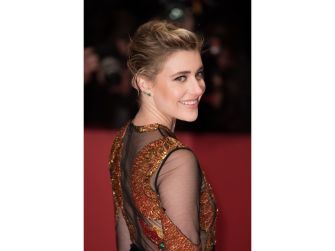
Greta Gerwig is set to bring the world of Narnia back to the big screen with a new adaptation of The Magician’s Nephew, marking the first time the origin story of C.S. Lewis’ fantasy universe will be adapted into a feature film.
The project, titled Narnia: The Magician’s Nephew, is scheduled for a theatrical release in IMAX and standard formats on February 12, 2027, before arriving on Netflix on April 2. Gerwig both wrote the screenplay and directed the film, continuing her shift into large-scale studio projects following the commercial and cultural success of Barbie.
The film features an ensemble cast that includes Meryl Streep, Daniel Craig, Emma Mackey, and Carey Mulligan, alongside newcomers David McKenna and Beatrice Campbell. The score is composed by Mark Ronson and Andrew Wyatt, suggesting a strong emphasis on music as part of the film’s storytelling.
In a statement, Gerwig described her personal connection to the source material, recalling how the book influenced her as a child. She pointed to the novel’s depiction of Narnia’s creation, particularly the image of a lion bringing the world into existence through song, as a concept that stayed with her long before she became a filmmaker.
The Magician’s Nephew, published in 1955, serves as a prequel within The Chronicles of Narnia, despite being the sixth book released in the series. Its narrative explores the origins of Narnia, including the creation of the magical world and the events that precede The Lion, the Witch and the Wardrobe, the most widely known installment.
Previous screen adaptations of the Narnia series have focused primarily on that latter story and its sequels. A television version aired on the BBC in 1988, followed by a major film adaptation in 2005 produced by Disney and Fox, which starred actors such as Tilda Swinton and Liam Neeson. That film led to two additional theatrical releases, Prince Caspian and The Voyage of the Dawn Treader. Gerwig’s project marks a departure from those earlier adaptations by exploring the earliest chapter in Narnia’s internal timeline.
The film represents another significant step in Gerwig’s evolving career. Known initially for smaller, character-driven films like Lady Bird and Little Women, both of which earned her Academy Award nominations for screenwriting, Gerwig has increasingly moved toward large-scale productions. Her work on Barbie demonstrated her ability to combine commercial appeal with thematic depth, generating more than $1.4 billion at the global box office and earning further critical recognition.
In previous interviews, Gerwig has spoken about her interest in working across different genres and scales, including projects that require expansive world-building. The Narnia adaptation aligns with that ambition, offering both a fantasy setting and a story rooted in mythology and imagination.