FKA Twigs delivered one of the most physically and emotionally intense performances of the Coachella weekend on Sunday night, closing out her set on the Mojave stage with a show that blurred the line between concert and performance art.
The 75-minute set drew heavily from her recent albums Eusexua and its companion project Eusexua Afterglow, both of which center on themes of transcendence, identity, and self-acceptance. Twigs has described “Eusexua” as a state of heightened euphoria that moves beyond the limits of the physical body, a concept that informed nearly every aspect of the performance.
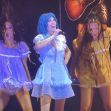
From the outset, Twigs approached the stage with a level of physical commitment that has become a hallmark of her live shows. Throughout the set, she combined vocals with demanding choreography, incorporating pole work, aerial movement, and partner-based routines. During “Love Crimes,” she performed atop another dancer, maintaining balance while continuing the song, and later introduced a sword into the choreography, adding a more theatrical, ritualistic dimension to the staging.
Despite the complexity of the performance, the production avoided relying on large-scale spectacle. Instead, it focused on movement and embodiment, with Twigs using her body as the central expressive tool. The set design remained minimal compared to other Coachella performances, allowing the choreography and music to remain the focal point.
The emotional peak of the night came during “Cellophane,” a track long associated with vulnerability in Twigs’ catalog. As she performed the song, her composure visibly shifted, and she appeared close to tears while facing the audience. The crowd, largely silent during the moment, remained fixed on the performance, amplifying the sense of intimacy despite the festival setting.
Between songs, Twigs addressed the audience directly, reflecting on the connection she has observed during her recent tour. She described seeing not just fans, but a community forming around her work, a sentiment she said was evident again in the Coachella crowd. The remarks aligned with the broader themes of Eusexua, which emphasize self-expression and collective experience.
The set also incorporated elements of ballroom culture, a recurring influence in Twigs’ recent work. A dance interlude featured appearances from Honey Balenciaga and Makayla Basquiat, introduced by Dashaun Wesley. The segment shifted the tone of the performance momentarily, bringing a celebratory energy before returning to the more introspective material.
Musically, the setlist closely followed the structure of her recent tour, though the Coachella performance intensified the physical and visual components. The adjustments reflected the scale of the festival while maintaining the core identity of the show.
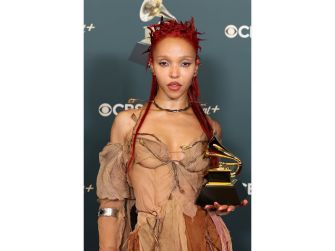
The performance also marked the conclusion of Twigs’ U.S. tour dates, which included a high-profile debut at Madison Square Garden. Earlier in the year, she received her first Grammy Award win for Best Electronic/Dance Album for Eusexua, further elevating the significance of the current phase of her career.
By the end of the set, the Mojave tent had shifted in atmosphere. What began as a festival performance evolved into something closer to a curated artistic statement, combining music, movement, and narrative into a cohesive whole. Rather than building toward a conventional high-energy finale, Twigs maintained the emotional tone established earlier, allowing the performance to close on a more reflective note.