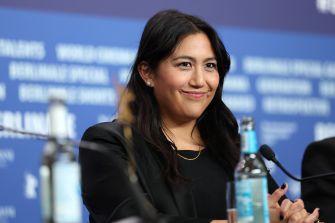
After emerging from Sundance with both the Grand Jury Prize and the Audience Award, director Beth de Araújo arrived at the Berlin International Film Festival carrying not only momentum but a clear message. Presenting her latest feature, Josephine, de Araújo emphasized that meaningful accountability for sexual abuse perpetrators remains urgently lacking and that this absence deepens the silence surrounding survivors.
At a Berlinale press conference ahead of the film’s screening, de Araújo reiterated sentiments she first expressed emotionally at Sundance. She argued that when perpetrators are not held responsible, the burden of healing falls disproportionately on victims. The imbalance, she said, fosters shame and isolation rather than justice. In her view, that shame should rest squarely with those who commit abuse.
Seated alongside actors and producers Channing Tatum and Gemma Chan, de Araújo described the film as an exploration of trauma through a child’s perspective. The story centers on an eight-year-old girl who witnesses a rape in San Francisco’s Golden Gate Park. The child, played by newcomer Mason Reeves, must process what she has seen while her parents navigate both her psychological fallout and the legal pursuit of justice for the survivor.
The narrative draws from de Araújo’s own childhood. She recounted that at age eight, she and her father interrupted a sexual assault in the same park. Although she did not testify in court as the fictional Josephine does, the memory left her with a lasting sense of hypervigilance. The film examines what she described as the tension between reasonable fear and excessive alertness, a psychological state she believes many women carry.
To accurately depict the legal and emotional complexities facing young witnesses, de Araújo undertook extensive research. She trained and became certified as a hospital-based witness advocate for sexual assault survivors, an experience she said informed the film’s portrayal of courtroom procedure and trauma response.
Josephine took more than a decade to bring to the screen. Originally developed at the Sundance Lab and intended as her debut feature, the project stalled due to financing obstacles. De Araújo ultimately made her first feature with the single-shot thriller Soft & Quiet, which premiered at SXSW and was later acquired by Blumhouse. Despite that breakthrough, securing funding for proved extraordinarily difficult.
Producer David Kaplan said that most financiers declined the project outright, citing concerns about its commercial viability and subject matter. He described skepticism about whether audiences would engage with a film centered on childhood trauma and sexual violence. Kaplan also suggested that bias against stories aimed at women and assault survivors played a role in the resistance.
The film’s fortunes shifted following its Sundance success, culminating in a competitive seven-figure U.S. acquisition by Sumerian Pictures.
At the press conference, de Araújo was asked whether society has made progress in how it treats survivors of sexual assault. Her response was measured. While acknowledging that public discourse has evolved in some places, she said she does not believe systems are significantly better equipped to support victims today. Her comment that perhaps one country “this week” appeared to be responding differently was widely interpreted as a reference to recent developments in the United Kingdom involving allegations tied to high-profile figures.
Tatum spoke personally about why the film resonated with him, particularly as the father of a 12-year-old daughter. He referenced a pivotal scene in which his character assures Josephine that she would never be punished for defending herself. Tatum said he has had similar conversations with his own child, emphasizing the importance of bodily autonomy and parental support.
The event briefly grew tense when a journalist asked Tatum about a separate controversy at this year’s Berlinale: an open letter signed by several filmmakers criticizing the festival’s stance on Gaza. Audience members began shouting, creating confusion. Tatum declined to comment substantively, and moderator Jacqueline Lyanga redirected the discussion.
Later, Tatum explained that his decision to join the film stemmed primarily from his admiration for de Araújo’s previous work. He described the script as honest and necessary, saying he wanted to contribute to something meaningful.
Chan, who signed on to the project in 2019 after reading the script, also shared a personal connection. She recalled witnessing a fatal stabbing in London in 2012 and later testifying in court. That experience, she said, deepened her emotional investment in a story about witnessing violence and confronting its aftermath.