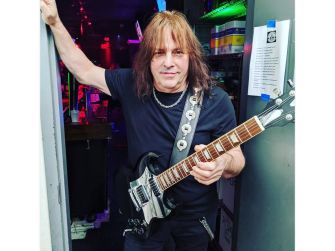
Ross “the Boss” Friedman, the influential guitarist and co-founder of both the Dictators and Manowar, has been diagnosed with Amyotrophic Lateral Sclerosis (ALS), the neurodegenerative condition commonly known as Lou Gehrig’s disease.
Friedman revealed the diagnosis on Monday, Feb. 9, sharing a brief statement addressing fans and supporters. “It’s difficult to know what lies ahead,” he said. “It crushes me not to be able to play guitar, but the outpouring of love has been so, so strong. I’m absolutely blown away by the love and support from family, friends and fans. I love you all.”
According to an accompanying statement, Friedman sought medical evaluation after experiencing a range of symptoms over several months, including weakness in his hands and legs. Initially, he believed the issues were the result of a series of minor strokes. Lifestyle changes, including adjustments to diet and exercise, as well as physical therapy, failed to halt the progression of the symptoms or restore strength. Further testing ultimately led to the ALS diagnosis.
ALS is a progressive disease that affects nerve cells in the brain and spinal cord, gradually impairing muscle control. There is currently no cure, and the condition often forces musicians and other physical performers to step away from their craft as symptoms advance.
Born in the Bronx, Friedman emerged as a foundational figure in New York City’s early punk scene. In 1973, he co-founded the Dictators with Andy Shernoff and Scott Kempner, helping to shape a sound that blended hard rock, humor, and confrontational energy at a time when punk was still finding its footing. Though the band never achieved mainstream commercial success on the scale of later punk acts, their influence proved substantial, particularly on the generation of musicians that followed.
During their original run, the Dictators released three studio albums, including 1977’s Manifest Destiny, which marked a rare moment of commercial recognition when it entered the Billboard 200. Friedman’s guitar work helped define the band’s identity and set them apart from their contemporaries.
In the late 1970s, Friedman pivoted to an entirely different corner of heavy music. Alongside bassist Joey DeMaio, he co-founded Manowar, a band that would become synonymous with an uncompromising vision of heavy metal. Embracing bombast, mythology, and volume as ideology, Manowar adopted the slogan “Death to false metal” and cultivated a fiercely loyal global fan base.
Friedman played with Manowar throughout the 1980s, a period that saw the release of six studio albums. Among them was Hail to England (1984), which later ranked at Number 87 on Rolling Stone’s list of the 100 Greatest Metal Albums of All Time. His playing during this era combined speed, precision, and theatricality, helping to codify a metal aesthetic that prized intensity and scale above all else. The band also set a Guinness World Record for the loudest live performance, further cementing their reputation.
After departing Manowar, Friedman continued working steadily across a wide range of projects. He formed the Ross the Boss Band and collaborated with numerous acts, including the French rock group Shakin’ Street, metal outfit Death Dealer, the Spinatras, and the Brain Surgeons. Though no longer operating within a single high-profile band, he remained a visible and respected figure within the metal and punk communities, touring regularly and maintaining close ties with fans.
In recognition of his contributions to heavy music, Friedman was inducted into the Metal Hall of Fame in 2017. The honor acknowledged not only his technical skill as a guitarist but also his role in shaping two distinct musical movements, New York punk and epic heavy metal, which are rarely linked through a single career.
Across decades of work, Ross “the Boss” Friedman helped lay the groundwork for sounds and scenes that continue to reverberate through punk and metal today.