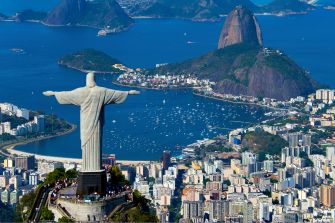
Rio de Janeiro recorded an unprecedented level of film and television production activity in 2025, reinforcing its status as one of Latin America’s most important audiovisual centers. According to data released by RioFilme, the city accumulated 10,930 filming days throughout the year, representing a 24.6% increase compared to 2024 and marking the highest total ever documented by the organization.
The figures were presented on March 12 by Leonardo Edde, president of RioFilme, during the Fórum Audiovisual & Turismo, an industry event focused on the intersection of film production, tourism development, and economic growth. The forum formed part of the broader TurisMall 2026 gathering, which brought together leaders from Brazil’s tourism and creative sectors to discuss strategies for international promotion.
According to RioFilme’s Film Commission, the city maintained more than 30 active production sets simultaneously throughout much of the year. These included a wide range of projects, from feature films and scripted television series to reality programs and advertising campaigns.
Domestic productions dominated the landscape, accounting for approximately 95.5% of all filming days in 2025. International projects represented a smaller but still significant portion of activity, making up the remaining 4.5%. In total, 28 foreign productions chose Rio as a filming location last year.
Industry leaders see this balance as both a strength and an opportunity. While the strong presence of Brazilian productions demonstrates the health of the national industry, attracting more international projects remains a strategic priority.
“The Brazilian audiovisual sector is extremely dynamic right now, which is something to celebrate,” Edde said during the event. “At the same time, one of our key objectives moving forward is to expand Rio’s appeal to foreign productions and increase our international partnerships.”
Rio’s growth reflects a broader global trend in which cities are competing to attract film and television productions, recognizing their potential to generate employment, stimulate local economies, and boost international visibility.
Recent data suggests Rio has already surpassed some traditional European production centers. The city overtook Paris in total filming days in 2023 and is now approaching Madrid, which reported 11,001 filming days in 2025. The narrowing gap highlights Rio’s rapid ascent in the international production rankings.
Local officials and industry advocates attribute this growth to a combination of factors, including diverse filming locations, favorable weather conditions, competitive production costs, and an expanding base of experienced technical professionals.
A central theme of the forum was the role of audiovisual productions as a tool for tourism promotion. Steve Solot, a longtime entertainment industry executive and former senior vice president for Latin America at the Motion Picture Association (MPA), emphasized the lasting marketing impact of films and television series compared to traditional advertising campaigns.
In his keynote remarks, Solot argued that storytelling has a unique ability to shape how audiences perceive destinations, often influencing travel decisions years after a production’s release.
“Screen productions tend to reach wider audiences and have a longer lifespan than conventional tourism campaigns,” Solot said. “More importantly, they create emotional connections that inspire people to experience these places in real life.”
Brazil’s former Minister of Culture, Sérgio Sá Leitão, echoed that sentiment, highlighting the reciprocal relationship between the audiovisual and tourism sectors. According to him, cities that successfully integrate these industries often benefit from job creation, increased revenue streams, and stronger global branding.
“Audiovisual production supports tourism, and tourism in turn supports the audiovisual economy,” Leitão said during a panel discussion. “Together, these sectors can create significant economic opportunities. Brazil already has examples of cities using this strategy effectively, but the potential remains far from fully explored.”
Despite the record-breaking numbers, industry leaders believe Rio still has room to grow, particularly by strengthening its international competitiveness. Strategies discussed at the forum included expanding production incentives, simplifying permitting processes, and increasing collaboration between government agencies and private studios.