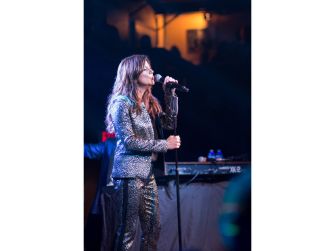
Martina McBride has become the latest artist to distance herself from the Freedom 250 concert series, publicly withdrawing from the event after saying she was led to believe it was a nonpartisan celebration rather than a program connected to the Trump administration.
The country star announced her decision in a statement posted to social media, explaining that she initially agreed to participate because organizers presented the event as an inclusive celebration of all 50 states. According to McBride, she only later discovered details that conflicted with that understanding, prompting her to remove herself from the lineup.
“I will not be performing at the Great American State Fair on June 25th,” McBride wrote. “I was presented with an opportunity to perform at a nonpartisan event, but it turned out to be misleading.” The singer said she spent time seeking clarification before committing to the performance and was repeatedly assured that the event was intended to bring people together rather than promote a political agenda. Based on those conversations, she viewed the show as an expanded version of the state fairs and community festivals she has played throughout her career.
“In my mind, I thought this was a great way to celebrate the states and also bring people together in the way that only music can,” she wrote. “I saw it as just a bigger version of so many state fairs I have performed at over the years, celebrating community and what makes each state special.” McBride’s withdrawal comes amid growing controversy surrounding the Freedom 250 concert series and the broader “Great American State Fair” initiative. What was initially promoted as a nationwide celebration marking America’s upcoming 250th anniversary has faced mounting criticism after reports revealed connections to a Trump-backed effort scheduled to run between June 25 and July 10.
As details about the event emerged, several performers began distancing themselves from the project, saying they were unaware of its political affiliations when they agreed to participate. Fans quickly questioned artists listed on promotional materials, leading to a series of public withdrawals.
Among the first musicians to back out was Morris Day, frontman of the Time, who publicly rejected participation after learning more about the event. Other artists soon followed. William King of the Commodores withdrew his involvement, while rapper Young MC told reporters he had no idea the festival was being promoted as a Trump-backed initiative when he initially signed on.
McBride’s departure has generated particular attention because of her long-standing reputation as an artist who has generally avoided partisan political battles throughout much of her career. Rather than framing her decision as a political statement, the singer emphasized that her concern centered on transparency and the expectations of her audience.
In her statement, she acknowledged concerns from fans who questioned whether her involvement signaled support for a political movement.
Her announcement quickly sparked reactions across social media, including criticism from Richard Grenell, a longtime Trump ally and former head of the Kennedy Center during its controversial restructuring under the Trump administration. Responding to McBride’s statement, Grenell dismissed her explanation and accused the singer of being politically motivated.
The exchange is the latest example of how increasingly difficult it has become for artists to navigate events that blur the line between entertainment and politics. In recent years, musicians have faced growing pressure from both supporters and critics over where they perform, who sponsors events, and what organizations are connected to those appearances.
As additional artists continue reviewing their involvement, the controversy surrounding the Great American State Fair has increasingly shifted attention away from the performances themselves and toward broader questions about transparency, sponsorship, and the role politics now plays in live entertainment.