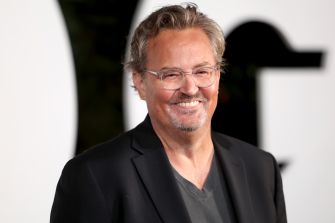
A federal judge in Los Angeles on Wednesday sentenced Jasveen Sangha to 15 years in prison for supplying the ketamine that led to actor Matthew Perry’s death in 2023, capping a two-year federal prosecution tied to his overdose.
Sangha, 42, had pleaded guilty to multiple federal charges tied to the distribution of ketamine, including one count of distribution resulting in death. At sentencing, U.S. District Judge Sherilyn Peace Garnett pointed to Sangha’s involvement in providing the fatal dose and described the scale of her drug activity as a key factor in the outcome. Prosecutors had sought the 15-year sentence, arguing Sangha operated a high-end drug network serving wealthy clients.
Perry, best known for his role as Chandler Bing on the television series Friends, was found dead in a hot tub at his Los Angeles home in October 2023. The medical examiner determined ketamine was the primary cause of death, with drowning listed as a secondary factor.
During the hearing, Sangha addressed the court and acknowledged her actions, stating they were “horrible decisions” that caused lasting harm. Members of Perry’s family also spoke about the impact of his death. His stepfather, journalist Keith Morrison, told the court the family continues to experience daily grief.
Federal prosecutors described Sangha as a major supplier in the events leading to Perry’s overdose, at times referring to her as the “Ketamine Queen,” a characterization her defense rejected as unfair. Her attorney, Mark Geragos, argued that addiction, not Sangha’s conduct, was the primary driver of Perry’s death and urged the court to impose a shorter sentence based on her lack of prior criminal history and conduct while in custody.
The charges in the case reflect how federal law treats drug distribution when it leads to a fatal overdose. Under federal statutes, prosecutors can bring enhanced charges when a person distributes a controlled substance that results in death. To secure a conviction on that charge, the government must prove the drug supplied was the direct cause of death, not simply one of several contributing factors. Without that finding, the conduct would typically be charged as standard distribution offenses, which carry significantly lower penalties.
Sangha’s guilty plea to distribution resulting in death exposed her to those heightened penalties. In determining the sentence, courts consider factors such as the scale of the activity, the individual’s role in supplying the drugs, and whether the conduct continued despite known risks. The judge pointed to evidence that Sangha continued selling ketamine even after learning a prior customer had died, along with the size and duration of her operation.
The broader case has involved several individuals connected to Perry’s access to ketamine. According to court records, a physician who admitted to illegally supplying Perry with the drug was sentenced to 2 1/2 years in prison. Another doctor received a sentence of home detention for his role in providing ketamine further up the supply chain.
Perry’s assistant and an associate, who admitted acting as intermediaries in obtaining and administering the drug, are awaiting sentencing.
Judge Garnett acknowledged concerns raised during the hearing about differences in punishment among those involved. However, she concluded that Sangha’s years of drug distribution and the scope of her client base made her conduct more serious than others connected to the case.
Sangha will receive credit for time served since her 2024 indictment.