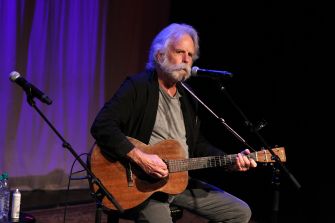
In the weeks following the death of Bob Weir, guitarist and songwriter John Mayer has announced a new weekly radio program centered on the music of the Grateful Dead. The series, titled Grateful Dead Listening Party, is intended to create a shared listening experience for fans still processing the loss of one of the band’s founding members.
Mayer announced the initiative through a statement on social media, explaining that he initially turned to Grateful Dead recordings for comfort after Weir’s death earlier this year. Instead of the reassurance he expected, he found the experience unexpectedly isolating. The music, he wrote, felt different without the presence of Weir, whose voice and guitar playing had been a defining element of the band for decades.
The idea for the listening series developed after Mayer spoke with friends who expressed similar feelings. Rather than listening privately, Mayer said he wanted to create an opportunity for fans to revisit the music together in a more communal setting, something closer to the shared experience that historically defined the Grateful Dead’s live audience.
The program will air every Sunday evening at 9 p.m. Eastern Time through Mayer’s radio channel on SiriusXM, titled LIFE with John Mayer. Each broadcast will feature approximately two hours of recordings drawn from the Grateful Dead’s catalog as well as performances from Dead & Company, the touring group formed in 2015 that included Mayer and several longtime members of the Dead’s extended musical circle.
During the program, Mayer plans to introduce and briefly discuss each recording while reflecting on the band’s music and its cultural legacy. The broadcast will not be live, but Mayer said he intends to listen to the program at the same time as fans.
Mayer joined Dead & Company in 2015, performing alongside Weir and other musicians connected to the Grateful Dead’s original lineup. The group emerged as one of several post-Grateful Dead projects formed after the death of Jerry Garcia in 1995, when the original band ceased touring under its historic name.
Dead & Company spent nearly a decade touring extensively, performing reinterpretations of the Grateful Dead’s songs for large audiences across the United States. The collaboration introduced Mayer, previously known primarily for his solo career, to a large community of longtime Dead fans.
In a recent interview discussing his relationship with Weir, Mayer described the musical partnership between the two guitarists as something that evolved gradually over time. Early in his tenure with Dead & Company, Mayer said he approached the music cautiously, aware of the deep connection many listeners had to the band’s original recordings.
As the years passed, Mayer said he became more comfortable navigating the improvisational structure of the music and developed a deeper musical rapport with Weir. According to Mayer, the two musicians eventually developed a shared instinct during live performances, often communicating subtle shifts in a song through small gestures or changes in phrasing.
Weir was one of the founding members of the Grateful Dead when the band formed in California in the mid-1960s. Over the course of several decades, the group developed a distinctive musical identity that blended rock, folk, blues, and psychedelic influences. Their concerts became known for extended improvisation and constantly evolving interpretations of songs.
The band’s fan community, often referred to as “Deadheads”, also became a defining part of the group’s cultural presence. Many fans followed tours from city to city, creating a traveling subculture centered around the music.
Mayer’s listening series reflects an effort to reconnect with that communal tradition in a different format. While it cannot replicate the experience of a live performance, the program aims to create a shared moment for listeners revisiting the band’s recordings.
In the weeks since Weir’s death, tributes to the musician have appeared across the music industry. Publications, including Rolling Stone, have published retrospective features examining Weir’s long career and his role in shaping the Grateful Dead’s sound.