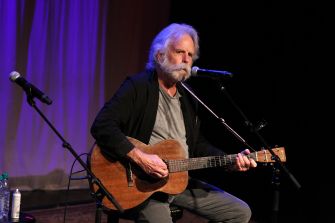
Bob Weir, the singer, songwriter, guitarist, and co-founder of the Grateful Dead, whose distinctive rhythm guitar style and wide-ranging songwriting helped shape one of the most influential bands in American music history, has died at the age of 78. His family confirmed the news in a statement, saying Weir died peacefully after complications related to underlying lung issues. He had previously been treated for cancer. A specific date of death was not immediately announced.
Weir was a central figure in the Grateful Dead for six decades, serving as the band’s co-lead vocalist, primary rhythm guitarist, and one of its most consistent creative forces. While Jerry Garcia was often viewed as the group’s musical and spiritual focal point, Weir’s contributions were essential to the band’s identity and longevity.
Born Robert Hall Weir on October 16, 1947, in San Francisco, he was adopted shortly after birth and raised in the Bay Area. As a child, Weir struggled academically due to undiagnosed dyslexia and was frequently disciplined for behavioral issues. Music became an early outlet. He learned guitar as a teenager and gravitated toward the folk and bluegrass scene developing around Palo Alto in the early 1960s.
Weir met Garcia on New Year’s Eve 1965 at Dana Morgan’s Music Store, where Garcia was playing banjo. The two quickly began performing together, first in acoustic groups and then in an electric band initially known as the Warlocks. Within months, the group adopted the name the Grateful Dead and became closely associated with Ken Kesey’s Acid Tests, helping to define the sound and ethos of San Francisco’s psychedelic era.
As the youngest member of the band, Weir initially struggled to keep pace musically. In 1968, he and keyboardist Ron “Pigpen” McKernan were briefly dismissed from the group due to concerns about their playing. Both returned within months. The episode marked a turning point for Weir, who dedicated himself to developing a distinctive rhythm guitar approach that avoided standard rock patterns in favor of syncopation.
That style became a defining element of the Grateful Dead’s sound. Rather than functioning as a traditional backing guitarist, Weir treated rhythm guitar as an equal voice within the band’s improvisational framework, interacting closely with Garcia’s lead lines and Phil Lesh’s unconventional bass playing. His approach allowed the band to maintain structure while remaining open-ended during extended live performances.
Weir also emerged as a key songwriter. Working frequently with lyricist John Perry Barlow, he wrote songs that drew on American folklore, travel narratives, and philosophical reflection. Tracks such as “Playing in the Band,” “One More Saturday Night,” “Cassidy,” and “The Other One” became staples of the Dead’s live shows. His first solo album, Ace (1972), effectively functioned as a Grateful Dead release and solidified his position as the group’s second most prolific songwriter.
Following Pigpen’s death in 1972, Weir took on a larger vocal role, often alternating lead vocals with Garcia. During the 1970s, the band released Workingman’s Dead and American Beauty, albums that blended country, folk, and rock influences and remain among the most celebrated in their catalog. Weir’s songs and vocal performances were central to that period, as was his growing confidence as a bandleader.
The 1980s brought increased challenges, particularly as Garcia struggled with addiction. Weir later acknowledged that he often worked to stabilize performances during that era, sometimes compensating musically when Garcia was unwell. Despite these difficulties, the band continued touring extensively and expanded its audience significantly.
After Garcia died in 1995, Weir refused to treat the Grateful Dead’s story as finished. He continued performing through various projects, including RatDog and later Furthur, keeping the band’s repertoire alive while adapting it to new lineups. In 2015, he played a leading role in organizing the Grateful Dead’s 50th anniversary Fare Thee Well concerts, which reunited the surviving core members for a limited run of shows.
That same year, Weir formed Dead & Company alongside drummer Mickey Hart, drummer Bill Kreutzmann, and guitarist John Mayer. While initially divisive among longtime fans, the project proved commercially and artistically successful, introducing the Grateful Dead’s music to a younger audience and sustaining large-scale touring well into the 2020s. The band concluded its final tour in 2023, followed by extended residencies.
Weir was also open about his own health struggles. In the early 2010s, he addressed an addiction to prescription painkillers and temporarily reduced his touring schedule. He later returned with renewed focus, forming Bobby Weir & Wolf Bros and exploring orchestral interpretations of the Grateful Dead songbook.
In his final years, Weir remained active and publicly engaged. In December 2024, he and other surviving members of the Grateful Dead received Kennedy Center Honors. In August 2025, Dead & Company marked the band’s 60th anniversary with a three-night run at Golden Gate Park in San Francisco. Those performances became Weir’s final appearances onstage.
Bob Weir’s influence extends far beyond his recorded output. He helped redefine live music as a participatory experience, shaped the modern jam-band tradition, and demonstrated that a band could operate outside conventional industry structures for decades.
Throughout his career, Weir resisted nostalgia, viewing the Grateful Dead as a living body of work rather than a fixed legacy. He often spoke about stewardship rather than ownership, emphasizing the importance of preserving the music through performance and reinvention.