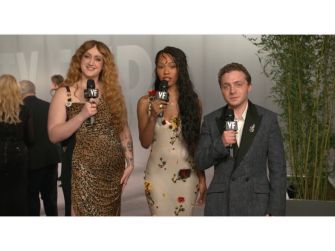
The Vanity Fair Oscar Party, long considered one of the most closely watched events of awards season, drew attention this year not only for its guest list but for a shift in how its red carpet was covered. For the first time under editor Mark Guiducci, the publication enlisted influencers, including Jake Shane and Quen Blackwell, to conduct interviews.
The approach reflected a broader industry trend of incorporating digital personalities into traditional media formats. However, several of the evening’s interviews highlighted the challenges of translating influencer-driven content into a live, unscripted setting.
During one exchange, Shane and Blackwell interviewed Kris Jenner. The conversation quickly lost direction, with Jenner at one point asking how the hosts had been selected for the role. Shane responded that he was unsure, a moment that underscored the lack of structure in the interaction.
Other interviews proved more problematic. In separate conversations with Julia Fox and Damson Idris, Shane repeatedly focused on his personal dislike of the film If I Had Legs I’d Kick You, which both actors had cited positively. The film, centered on a mother navigating a child’s serious illness, prompted more reflective responses from the actors than the questioning allowed.
Idris attempted to shift the conversation toward a specific scene in the film, but his response was interrupted. Fox, meanwhile, tried to contextualize the film through her own experience as a parent, but the exchange became increasingly one-sided. She eventually ended the interview herself after attempting to continue the discussion without engagement from the hosts.
The interactions drew attention to the difference between controlled, personality-driven formats and real-time interviewing. Shane’s work on his podcast Therapuss relies on edited conversations and a casual tone that allows for flexibility after recording. On a red carpet, however, interviews unfold in real time, requiring responsiveness to what guests are saying and an ability to guide the conversation.
Red carpet coverage is often dismissed as superficial, but it operates within its own conventions. Interviews are brief, but they still depend on listening, timing, and a degree of preparation. When those elements are absent, conversations can stall or become disconnected from the subject at hand.
The decision to feature influencers in this role reflects a wider shift in entertainment media, where outlets are increasingly blending traditional reporting with digital-first personalities in an effort to reach broader audiences. In some cases, this has led to new formats that feel less formal and more conversational.
However, the Vanity Fair event suggests that not all formats translate easily. The skills required for live interviewing, including adapting to unexpected responses and maintaining focus, differ from those used in pre-recorded or edited content.
The Vanity Fair Oscar Party has historically maintained a more structured approach to coverage, particularly under former editor Graydon Carter, whose tenure emphasized editorial precision. The shift this year represents a departure from that model, raising questions about how such events are presented moving forward.