At a time when studios continue to lean heavily on sequels, reboots, and familiar intellectual property, one of the year’s most profitable theatrical releases comes from a horror film that cost less than $1 million to make.
Obsession, the low-budget thriller from first-time feature director Curry Barker, has emerged as the surprise breakout of the Memorial Day corridor, delivering the kind of second-weekend box office performance that is exceptionally rare for any wide release, and almost unheard of for horror.
The film earned $22 million in its second weekend from 2,655 North American theaters, with projections pushing its extended holiday total to $28.2 million. More notably, that figure represents a roughly 30% increase over its opening weekend, when the film debuted to an already impressive $17.2 million from 2,615 locations. In an industry where second weekends are typically defined by decline, particularly in horror, the upward trajectory immediately drew attention.
So far, Obsession has grossed $58.5 million domestically and $74 million worldwide, turning a microbudget production into one of the year’s most efficient financial success stories.
That kind of performance is particularly striking within the horror genre, which has long operated under a front-loaded business model. Horror audiences traditionally show up early, often driven by social curiosity, spoiler avoidance, or opening-weekend urgency, only for attendance to collapse once broader audiences weigh in. Obsession has done the opposite, building momentum after release rather than losing it.
The film holds a 94% score on Rotten Tomatoes and earned an A- CinemaScore, an unusually strong audience grade for horror. Exit polling in the genre tends to run lower because viewers frequently leave feeling unsettled, frustrated, or divided by intentionally bleak endings. Only a small number of horror titles in recent years have managed comparable audience scores, making Obsession’s reception particularly notable.
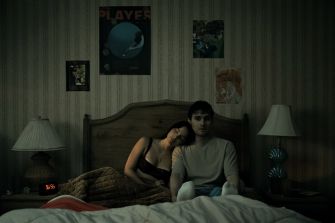
Written and directed by Barker, the film follows Bear, a lonely romantic who makes a Faustian bargain to win over his crush, Nikki, only to trigger increasingly disturbing consequences. The premise combines psychological horror, relationship obsession, and supernatural mechanics in a way that appears to have resonated strongly with younger moviegoers.
According to PostTrak, 75% of Obsession ticket buyers were between 18 and 25 years old, a demographic that continues to show up consistently for original horror, even as other genres struggle to bring younger audiences into theaters. The success of titles like Barbarian, Talk to MeLonglegsWeaponsM3GAN, and The Black Phone has already established horror as one of the healthiest categories in theatrical distribution. now joins that list, though with a profit margin that makes the comparison even more striking.
Rather than platforming the film slowly, as distributors often do with smaller originals, Focus Features opted for a wide commercial launch. The marketing leaned heavily into audience interaction, building intrigue around One Wish Willows, the fictional supernatural device at the center of the film. Promotional versions of the product reportedly sold out within hours, while billboard campaigns in Los Angeles and New York featured unsettling fictional texts, messages, and phone prompts tied directly to the story.
Even weekday grosses told an unusual story. Before Disney’s The Mandalorian and Grogu arrived, Obsession held the top spot at the North American box office Monday through Thursday, a rare achievement for an original horror release competing against larger studio product.
Barker is part of a growing generation of filmmakers who built audiences online before moving into theatrical filmmaking. The director first gained visibility through YouTube, joining a pipeline that increasingly includes creators transitioning from digital platforms into traditional distribution. Earlier this year, Markiplier’s independently released Iron Lung posted strong commercial results, while A24’s upcoming Backrooms, directed by YouTube creator Kane Parsons, is already generating breakout expectations.