For years, Hollywood has treated YouTube as the competition: a platform pulling viewers away from movie theaters and shortening attention spans one viral video at a time. But the recent success of two breakout horror films suggests a different reality may be emerging. Rather than replacing traditional filmmaking, the internet may be creating the next generation of filmmakers, audiences, and box-office hits.
Within a matter of weeks, two low-budget horror movies from directors who built their careers online have become unlikely success stories. Obsession, directed by 26-year-old filmmaker Curry Barker, and Backrooms, the feature debut from 21-year-old creator Kane Parsons, have not only exceeded expectations but also sparked a larger conversation about the future of genre filmmaking. Their success has prompted industry observers to ask whether a new wave of Gen-Z horror is taking shape, driven less by established franchises and more by creators who developed audiences through digital platforms before ever stepping behind a studio camera.
The two films could hardly be more different in execution. Obsession begins with a deceptively simple premise. Michael Johnston stars as Bear, a young man hopelessly in love with his co-worker Nikki, played by Inde Navarrette. Unable to express his feelings, he stumbles across a mysterious object known as a "One Wish Willow," a supposedly magical item capable of granting a single wish. In a moment of frustration and desperation, Bear wishes that Nikki would love him more than anyone else in the world. The wish is granted, but with consequences that quickly transform a romantic fantasy into something far more disturbing.
While the premise draws from familiar cautionary tales about wishes gone wrong, Barker’s film succeeds by steadily escalating the tension rather than relying on cheap scares. What begins as an awkward romantic setup gradually evolves into psychological horror, with Nikki’s growing obsession creating increasingly unsettling consequences. The film’s ability to balance dark humor, emotional discomfort, and outright terror helped it stand out in a crowded horror landscape.
The project also accelerated Barker’s rise within the industry. Before making feature films, the director built an online following through comedy sketches and digital content. Following its premiere at the Toronto International Film Festival’s Midnight Madness program in 2025, Obsession became one of the festival’s most talked-about acquisitions, ultimately landing at Focus Features in a deal reportedly worth $15 million. The film then defied conventional box-office logic by increasing its ticket sales during its second weekend in theaters, a rare feat in modern theatrical distribution and a sign that strong word-of-mouth was driving audiences to discover it.
If Obsession represents one side of the new horror movement, Backrooms may represent the other. Developed from a series of viral online horror shorts, the film originated from the imagination of Kane Parsons, better known online as Kane Pixels. Parsons gained a massive following through a collection of found-footage videos exploring the mysterious concept known as “the backrooms” - endless, unsettling spaces that seem to exist outside normal reality.
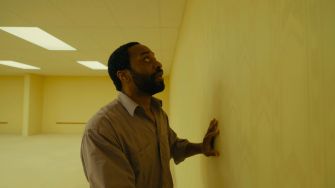
His feature adaptation expands that concept into a larger narrative. The story follows Clark, played by Chiwetel Ejiofor, a furniture store manager who accidentally discovers a hidden passage leading into a labyrinth of impossible hallways and empty rooms. After Clark disappears, his therapist, portrayed by Renate Reinsve, begins investigating and soon finds herself drawn into the same strange environment. What follows is a surreal descent into an increasingly disorienting world where conventional rules no longer apply.
The film’s minimalist approach, combined with its dreamlike atmosphere and internet-born mythology, resonated strongly with younger audiences already familiar with the original online phenomenon. That enthusiasm translated into a remarkable commercial performance. Backrooms has generated more than $200 million worldwide, making it the highest-grossing film in A24’s history and proving that ideas born on the internet can successfully leap mainstream theatrical audiences.
The success of both films has inevitably fueled speculation about a broader shift in the industry. Yet neither project emerged in isolation. Several filmmakers have already demonstrated that online audiences can be converted into theatrical success. Australian twins Danny and Michael Philippou, known to millions through their RackaRacka YouTube channel, made the transition with A24’s acclaimed horror hit Talk to Me. Content creator Mark Fischbach, better known as Markiplier, achieved a similar breakthrough with Iron Lung, which turned a modest production budget into a major financial success.
What makes Obsession and Backrooms particularly significant is the timing. Their success arrives amid growing audience fatigue surrounding franchise-heavy studio releases. While major intellectual-property films continue to dominate production schedules, younger moviegoers increasingly appear willing to support original concepts that offer something different from the familiar cycle of sequels, reboots, and cinematic universes.
Whether this moment develops into a lasting movement remains to be seen. Hollywood has a long history of chasing trends, often mistaking short-term success for permanent change. Yet there are signs that something more substantial may be happening. The tools required to create compelling visual effects, build an audience, and distribute creative work have never been more accessible.
Perhaps that is the most important lesson behind the success of Obsession and Backrooms. These films are evidence that a generation raised on digital platforms is beginning to reshape the film industry itself.