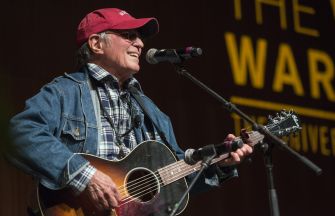
Country Joe McDonald, frontman of the 1960s psychedelic-folk band Country Joe and the Fish and writer of the anti–Vietnam War song I-Feel-Like-I'm-Fixin'-to-Die Rag, died on March 7 in Berkeley, California. He was 84.
The band announced his death through its official social media channels, stating that McDonald died from complications related to Parkinson's Disease. According to the statement, he was surrounded by family.
McDonald was widely associated with the protest music movement of the 1960s, when folk and rock musicians increasingly addressed social and political issues in their work. His songs often combined satire, folk traditions, and political commentary, reflecting the broader cultural tensions of the Vietnam War era.
Born in Washington, D.C., McDonald was raised in California and developed an interest in folk music during the early 1960s. Influenced by artists such as Woody Guthrie, he began writing songs that addressed political issues while performing in coffeehouses across the San Francisco Bay Area.
During that period, he formed Country Joe and the Fish with guitarist Barry Melton. The group became part of the San Francisco psychedelic rock scene, performing alongside bands including Jefferson Airplane and Quicksilver Messenger Service.
McDonald achieved national recognition with “I-Feel-Like-I’m-Fixin’-to-Die Rag,” written in 1965 as U.S. military involvement in Vietnam escalated. The song satirized the rhetoric surrounding the war and quickly became associated with the growing antiwar movement. Its refrain, “And it’s one, two, three, what are we fighting for?”, was widely recognized at protests and demonstrations.
The song was later recorded with Country Joe and the Fish for their 1967 album of the same name. During live performances, the band introduced the track with a chant known as “The Fish Cheer,” which encouraged audiences to spell out an obscenity before launching into the song. The routine became one of the group’s most recognizable stage moments.
McDonald delivered one of the song’s most famous performances at Woodstock in 1969, where he appeared solo with a guitar before leading the crowd in the chant and performing the anti-war anthem. The moment was later included in the documentary film about the festival and helped cement the song’s place in the cultural memory of the period.
Country Joe and the Fish dissolved not long after the Woodstock era, and McDonald began a solo career. His first solo release, Thinking of Woody Guthrie, in 1969, paid tribute to the folk singer who had influenced his songwriting.
Over the following decades, McDonald continued recording and performing, releasing more than 30 albums between the early 1960s and the mid-2010s. While his commercial visibility declined after the 1970s, he remained active as both a musician and a political activist.
McDonald also took part in political and social causes beyond his music. He advocated for environmental issues, including campaigns to protect marine life, and supported organizations assisting Vietnam War veterans.
His career ultimately spanned more than five decades, linking the folk revival of the early 1960s, the psychedelic rock movement of the San Francisco scene, and the protest music that defined a generation of political expression in American popular culture.