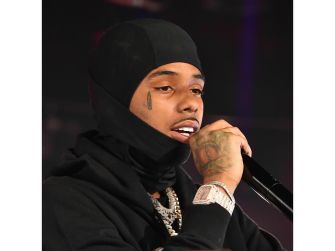
Rapper Pooh Shiesty will remain in federal custody after a Texas judge denied his request for bail, citing the seriousness of the charges and the risk he could flee or pose a danger if released. The decision comes as prosecutors pursue a case that alleges a business dispute turned into a violent confrontation inside a Dallas recording studio earlier this year.
Shiesty, born Lontrell Williams Jr., appeared in court this week following his arrest on charges tied to an alleged January 10 incident involving Gucci Mane, whose legal name is Radric Davis. According to a federal complaint, the meeting was initially arranged to address dissatisfaction with a recording contract under 1017 Records. Prosecutors argue that instead of a negotiation, the situation escalated into what they describe as a coordinated act of intimidation involving multiple individuals and a firearm.
In a written order, U.S. Magistrate Judge Renée Harris Toliver said there was “credible evidence” supporting the charges and concluded that no set of release conditions would adequately ensure Williams’ return to court or protect the public. The charges include conspiracy to commit kidnapping, a felony that carries a potential life sentence.
According to federal authorities, Williams traveled from Memphis to Dallas with a group that included his father and rapper Big30. Once inside the studio, prosecutors say one of the men retrieved a bag containing an AK-style firearm. They allege the weapon was used to threaten Davis and force him to sign paperwork releasing Williams from his contract.
The complaint further claims that multiple people inside the studio were prevented from leaving while their valuables, including watches, jewelry, cash, and personal belongings, were taken. One person was allegedly choked to the point of nearly losing consciousness.
Investigators have pointed to several pieces of evidence they say support the case. Among them is data from Williams’ ankle monitor, which prosecutors say places him at the scene despite being on home detention at the time. Authorities also cite surveillance footage, license plate reader data showing travel from Memphis to Dallas, and rental records tied to vehicles used by the group.
Williams’ attorney, Bradford Cohen, has pushed back on the prosecution’s claims, questioning both the timeline and the strength of the evidence. After the hearing, Cohen argued that the delay in filing charges suggests uncertainty on the part of investigators.
He also disputed key aspects of the case, including the alleged contract at the center of the confrontation. According to Cohen, prosecutors have not produced the document they claim was signed, nor physical evidence such as weapons or stolen items.
“There is no contract,” Cohen said, adding that early witness accounts were inconsistent and should be treated with caution.
The court’s decision to deny bail was also influenced by Williams’ legal history. He was released from prison in 2025 after serving part of a five-year sentence related to a federal gun conviction. As part of that release, he was placed on home detention and prohibited from possessing firearms.
Prosecutors argue that his presence in Dallas and the alleged use of a weapon would constitute clear violations of those conditions. The judge agreed that these factors weighed heavily against pretrial release. Williams is one of nine defendants charged in the case, all facing conspiracy to commit kidnapping.
No trial date has been announced, but the case is expected to move forward in federal court in Texas.