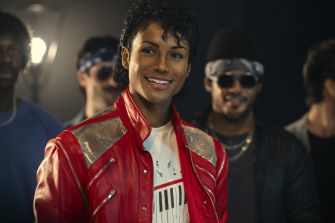
The long-awaited Michael Jackson biopic, Michael, arrives after years of development shaped by legal, creative, and logistical challenges. While the film traces the rise of the King of Pop and concludes in 1988 with a triumphant stadium performance in London, it notably omits any reference to the sexual-abuse allegations that emerged later in his life, an absence that has drawn scrutiny and reflects just one of several factors that complicated the production.
Efforts to bring Jackson’s life story to the screen date back at least four years, when producer Graham King publicly confirmed plans for a full-scale biopic. King, who previously produced the successful Queen film Bohemian Rhapsody, said the project had been decades in the making from a personal standpoint. However, translating Jackson’s complex legacy into a feature film proved far more difficult than anticipated.
One major obstacle stemmed from Jackson’s own longstanding discomfort with public exposure. In his 1988 autobiography Moonwalk, co-edited by Jacqueline Kennedy Onassis, Jackson expressed reluctance to fully reveal his personal life, citing a desire to preserve some degree of privacy. He described avoiding eye contact in public and resisting openness, a mindset that extended to his creative decisions. According to editor Shaye Areheart, Jackson nearly canceled publication of the book after reviewing it, concerned about how much of himself he had revealed.
Jackson’s complicated relationship with Hollywood also played a role. Despite early screen appearances in projects like The Wiz and Captain EO, and his ambition to build a film career comparable to Elvis Presley, studios were often hesitant to cast him. Industry figures have acknowledged that concerns about his appearance and public image made executives wary of placing him in leading film roles, limiting his ability to establish a cinematic legacy during his lifetime.
In more recent years, renewed attention on allegations against Jackson further complicated the path to a biopic. The 2019 HBO documentary Leaving Neverland, which focused on accusers Wade Robson and Jimmy Safechuck, reignited public debate around Jackson’s legacy. Following the documentary’s release, Jackson’s estate filed a lawsuit against HBO, arguing that the network had violated a non-disparagement agreement. A court later sided with the estate, sending the dispute to arbitration. The legal sensitivity surrounding Jackson’s image created a cautious environment for studios considering any project that might address those allegations.
Legal constraints also directly impacted the film’s narrative. Early versions of the biopic reportedly included material related to a 1993 investigation involving Jordan Chandler, whose allegations against Jackson led to a settlement. However, during production, attorneys for Jackson’s estate identified a clause in that settlement prohibiting any portrayal or reference to Chandler in future films. As a result, filmmakers were forced to remove and reshoot key sequences, including a recreation of a police search of Jackson’s Neverland Ranch. These last-minute changes significantly altered the film’s structure, shifting its focus toward Jackson’s relationship with his father, Joseph Jackson, rather than the controversies that followed his peak years.
The project also faced delays tied to external factors. Screenwriter John Logan was affected by the Palisades fire, which damaged his home during a critical phase of rewriting the film’s ending. Ultimately, the production moved away from a darker conclusion and instead closed on a celebratory moment tied to Jackson’s Bad era.
Additionally, the Jackson estate’s focus on other posthumous ventures, including the concert documentary This Is It, Cirque du Soleil productions, and the Broadway show MJ the Musical, meant that a narrative feature film was not an immediate priority. According to King, the biopic required years of research, including interviews with hundreds of individuals connected to Jackson’s life.
Taken together, these factors, ranging from legal limitations and estate control to creative revisions and real-world disruptions, help explain why Michael arrives now, years after its initial announcement.