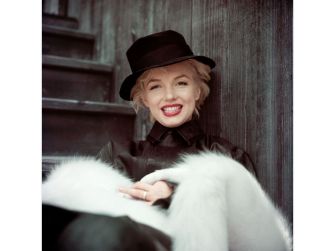
Nearly six decades after her death, Marilyn Monroe continues to captivate the world, and a landmark new publication is set to offer audiences the most intimate and unfiltered glimpse yet into the mind of one of Hollywood's most enduring icons. For the first time in its entirety, Monroe's final interview, conducted with Life magazine editor Richard Meryman in the summer of 1962, will be made available to the public through an upcoming book titled "Marilyn: The Lost Photographs, The Last Interview," which is scheduled for release on May 12.
The volume pairs the full, previously unpublished text of Monroe's last known interview with a collection of never-before-seen photographs taken by acclaimed photographer Allan Grant during what would become her final professional photo shoot. Together, the materials paint a portrait of a woman who, in her final weeks of life, was reflective, self-aware, and remarkably candid about the complexities of the extraordinary life she had led.
The interview itself originally appeared in print on August 3, 1962, published by Life magazine. Tragically, Monroe died the very next evening from a barbiturate overdose at her home in Los Angeles. She was 36 years old. Her death was officially ruled a probable suicide, and the loss sent shockwaves across the globe, silencing one of the most recognizable voices of the 20th century just as she was apparently finding new clarity about her place in the world.
Among the most striking revelations in the excerpts made available ahead of the book's release are Monroe's candid reflections on her identity as an international sex symbol, a label that had followed her throughout her career and that she addressed with a directness and even a sense of humor that may surprise those accustomed to more guarded public personas. Rather than distancing herself from the designation, Monroe embraced it, framing it as a conscious choice rooted in something she viewed as natural and fundamentally human.
Speaking to Meryman during the interview, Monroe expressed that if she was going to be a symbol of anything, she preferred that it be sexuality over some of the alternatives the culture had on offer. She stressed that she did not view her appeal as something manufactured or performed. According to her, sexuality only carries genuine power when it arises naturally and without calculation, and she insisted that she had never approached her work or her public presence from a place of deliberate sexual strategy.
Perhaps most surprisingly, Monroe revealed that despite her legendary status as one of the most sensual figures in cinema history, she had never actually performed what she considered a truly erotic scene on screen. Far from being a source of regret, she described it as unfinished business, something she had long wanted to explore as an actress. Her reasoning was grounded in a philosophy about art and the human condition rather than in any desire for shock value. She spoke of sexuality as a natural gift bestowed upon all people at birth, and lamented what she saw as a widespread cultural tendency to suppress or shame that gift rather than honor it. In Monroe's view, genuine artistic expression draws directly from that well of human sensuality, and any society that teaches people to fear or reject it is impoverishing its own creative potential.
The upcoming publication arrives at a particularly meaningful moment in the Monroe cultural calendar. June 1, 2026, will mark what would have been Monroe's 100th birthday, and the release of this book just weeks before that milestone makes the timing feel both deliberate and poignant. A century after her birth, the woman born Norma Jeane Mortenson remains one of the most written-about, photographed, analyzed, and debated figures in American cultural history.
Beyond her reflections on sexuality and artistry, Monroe also spoke with striking honesty about the nature of fame and the complicated relationship she had developed with it over the years. She likened celebrity to caviar, desirable in measured quantities but overwhelming and even unpleasant when consumed without restraint or relief. It was a metaphor that conveyed both an appreciation for the life she had built and a weariness with the relentlessness of public attention.
Monroe also recounted a physically harrowing encounter with fame following a 1961 hospitalization in New York, where she had undergone gallbladder surgery. As she emerged from the medical facility still recovering from the procedure, she found herself surrounded by pressing crowds whose enthusiasm, however well-intentioned, caused her surgical wound to reopen. Rather than expressing bitterness about the incident, Monroe described it as a moment of revelation.
"Marilyn: The Lost Photographs, The Last Interview" is available May 12. For Monroe enthusiasts, historians, and anyone fascinated by the intersection of fame, art, and the human experience, the book promises to be an essential and long-overdue document.