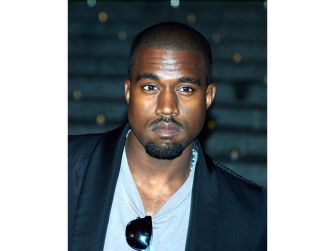
Kanye West has lost the first jury trial stemming from one of the many copyright disputes that have followed his career, with jurors finding that the artist unlawfully used an uncleared sample in an early version of Hurricane and awarding six-figure damages to the musicians behind the original recording.
The verdict, delivered Tuesday in federal court, found West, now legally known as Ye, personally liable for $176,153 in damages. His company, Yeezy LLC, was ordered to pay an identical amount, while affiliated entities Yeezy Supply and Mascotte Holdings were found liable for smaller additional sums, bringing the total judgment to more than $438,000.
The case centered not on the final version of Hurricane released on Donda, but on an earlier version of the song performed at Ye’s highly publicized July 2021 listening event at Atlanta’s Mercedes-Benz Stadium. Plaintiffs argued that version directly sampled an unreleased instrumental demo titled MSD PT2, created in 2018 by musicians Khalil Abdul-Rahman, Sam Barsh, Dan Seeff, and Josh Mease, without permission, payment, or a licensing agreement.
After a six-day trial, the jury unanimously agreed.
For the plaintiffs, the verdict represents a rare courtroom victory for lesser-known working musicians challenging one of the most commercially powerful figures in modern music. Britton Monts, a manager for Artists Revenue Advocates, the company that pursued the lawsuit after acquiring the musicians’ claims, framed the outcome as a broader statement about access to legal recourse in an industry where smaller creators often lack the resources to fight high-profile infringement cases.
A spokesperson for the artist dismissed the verdict as financially insignificant compared with the plaintiffs’ earlier demands, characterizing the lawsuit as an attempted cash grab rather than a legitimate copyright claim. His legal team declined formal comment following the decision.
The plaintiffs argued there was never any agreement, implied or explicit, allowing Ye to incorporate MSD PT2 into Hurricane. Their lawyers described the instrumental as the backbone of the song’s early form, pointing to testimony that the one-minute demo provided its core sonic framework. They also argued that Ye monetized that use through ticket sales, merchandise, and a streaming agreement tied to the Atlanta event before later removing the sample from the commercially released version.
Evidence presented at trial showed Ye later replaced the direct sample with recreated musical elements rather than retaining the original recording on the final Donda release. His legal team argued that this demonstrated good-faith correction, not infringement worthy of significant damages.
Jurors were shown social media posts in which the four creators celebrated hearing their work associated with Ye after an early version of Hurricane surfaced online under the title 80 Degrees. Defense attorneys argued those reactions suggested enthusiasm rather than objection, framing the situation as one where emerging musicians were eager for collaboration with a major artist.
Ye’s lawyer argued that the artists were effectively welcoming the exposure and only later reframed the dispute once financial stakes became clear.
A major portion of the original lawsuit had already been dismissed before trial, specifically claims involving the final released version of Hurricane. The judge ruled that the musicians had previously assigned away certain composition rights under older agreements, eliminating what could have been a much more financially significant infringement claim tied to the commercially released song’s alleged interpolation of their work.
The trial also offered an unusual look into Ye’s business operations, including testimony about the economics of the Donda listening event and appearances from figures in his inner circle, including Milo Yiannopoulos, who testified as Ye’s spokesperson and legal liaison.