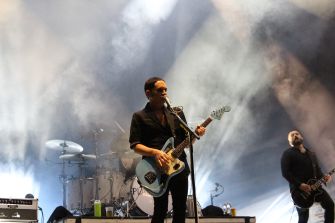
Thirty years after releasing their self-titled debut album, Placebo are revisiting the record that launched their career, though not in the way most bands typically mark a major anniversary. Rather than simply remastering the original tracks and repackaging them for fans to purchase again, Brian Molko and Stefan Olsdal have described their new project, Placebo RE:CREATED, as something closer to a director's cut, an attempt to bring three decades of accumulated experience back to songs whose original spirit they were determined to preserve rather than overwrite. The project arrives as the band prepares to receive the Pride Icon Award at the PEUGEOT Attitude PRIDE Awards.
That song, "Nancy Boy," remains the track most strongly associated with Placebo's identity, yet Molko revealed it almost never made it onto the album at all. He recalled writing the chords on a borrowed four-track cassette recorder around the same time he demoed another early track, "36 Degrees," but immediately doubted whether the new song fit his musical sensibilities at the time, given his heavy interest in Sonic Youth and noisier guitar music. He brought the chords to Olsdal anyway, warning him in advance that the progression felt overly mainstream and rooted in classic rock structures he wasn't sure he wanted associated with the band. Olsdal's reaction told a different story entirely, as he immediately recognized the commercial strength of the hook and insisted the song needed to be developed further, reflecting his own long-standing appreciation for pop songwriting.
Molko explained that the tension between accessibility and edge ultimately became the song's defining quality. Rather than abandon the melodic hook for being too immediate or catchy, he leaned into distorted, aggressive guitar tones specifically to offset what he saw as the song's underlying sweetness, creating a contrast between pop melody and abrasive instrumentation that he credits as the real source of the track's lasting appeal.
Neither musician anticipated just how far the song would travel commercially. Molko described being stunned when "Nancy Boy" climbed into the Top 20, and even more shocked when it eventually reached the Top 5 on the UK charts by the end of 1996. That success quickly led to an appearance on Top of the Pops, an experience Molko remembers as deeply surreal, particularly given the opportunity it created to meet Depeche Mode for the first time. Following that television appearance, the band received dozens of complaints from confused viewers unable to determine Molko's gender, a reaction the band interpreted as confirmation that they were doing something culturally disruptive and worth continuing.
Molko acknowledged the long history of bands that experience a brief chart breakthrough before fading into obscurity, admitting that outcome felt entirely possible for Placebo as well, even as circumstances ultimately worked out differently for the band.
As part of the revisiting process, the band uncovered material they had originally chosen not to use, including alternate vocal takes that didn't make the final mix decades earlier. They also brought a previously hidden bonus track, an instrumental piece called "HK Farewell," to the forefront of the new version, finally completing a piece that had originally been recorded informally as the band experimented in the studio. According to Molko, very little has actually been removed from the original record, aside from a stray didgeridoo and a few bongo recordings, with the overwhelming majority of changes reflecting addition and refinement rather than alteration of the band's original performances.