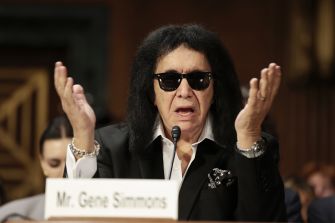
Kiss co-founder Gene Simmons urged federal lawmakers to support new legislation that would require radio broadcasters to compensate recording artists for the use of their music on terrestrial radio. Simmons delivered his remarks Tuesday before a Senate subcommittee reviewing the American Music Fairness Act, a bill that would close a longstanding loophole in U.S. copyright law.
Under current federal rules, only songwriters receive compensation when their music is played on traditional AM/FM radio. While recording artists receive royalties from digital streaming, they do not receive performance royalties from terrestrial radio, regardless of the frequency of airplay or the commercial value the broadcast creates. The system has been in place for decades and continues to be a central point of contention between performers and radio broadcasters.
Simmons noted that some of the most recognized artists in American music history never received any payment for radio usage of their recordings. He referenced Frank Sinatra, Bing Crosby, and Elvis Presley, all of whom released landmark recordings that remain consistent features of radio programming. Simmons said many iconic artists were unaware they were not entitled to royalties for broadcast performances, despite significant public exposure and commercial value connected to their work. According to Simmons, he recently discussed the issue with George Strait at the Kennedy Center Honors, and Strait was surprised to learn he had never been compensated for radio play of his catalog.
“It is difficult to understand how performers responsible for some of the most influential recordings of the last century have received no compensation when broadcasters earned substantial advertising revenue using those same works,” Simmons told legislators. He argued that the current system undermines creative labor, particularly for legacy artists with recordings that continue to generate value for broadcasters long after release.
The American Music Fairness Act, first introduced in Congress several years ago and now revived with bipartisan interest, would require broadcast radio stations to pay performance royalties to recording artists and copyright holders. The legislation is supported by SoundExchange, the nonprofit responsible for collecting and distributing digital royalties, as well as numerous artist advocacy groups and a large coalition of performers. During the hearing, SoundExchange president Michael Huppe reiterated that the United States is one of the only major markets where recording artists do not receive royalties from radio broadcasts.
The United States aligns with only a few countries in this practice, including Cuba, Iran, and North Korea. By contrast, many European and Asian markets compensate both songwriters and performers, and some nations have withheld royalty payments to American artists in protest of the U.S. system.
Local broadcasters have expressed concern that new performance royalties could impose financial pressure on smaller stations. Henry Hinton, a North Carolina broadcaster who testified before the panel, argued that additional fees could limit the resources stations use for local coverage, such as community events, high school sports, or regional news. He said broadcasters play a vital civic role and do not believe additional costs should be introduced without financial offsets.
Simmons responded that broadcaster estimates overstated potential burdens, noting that performance fees for smaller stations would be modest based on proposed rate structures. Supporters of the bill argue that reform would more fairly distribute revenue generated by radio programming and help ensure that performers are properly compensated for the continued commercial value of their recorded work.
The legislation has gained prominent support from artists including David Byrne, Boyz II Men, Master P, Randy Travis, and other advocates for music industry compensation reform. The bill now moves forward for continued debate, with lawmakers weighing both the economic impact on broadcasters and the longstanding inequity in artist compensation. It remains one of the most significant royalty reform efforts proposed in the last decade.