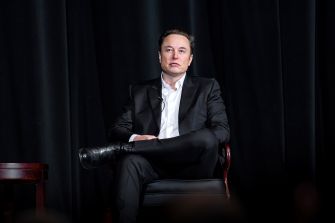
Elon Musk has once again inserted himself into the conversation surrounding Christopher Nolan’s upcoming epic The Odyssey, escalating earlier criticism of the film’s casting with a fresh round of posts on X targeting Lupita Nyong’o’s role as Helen of Troy.
The latest comments followed a newly published Time profile of Nolan, which confirmed that Nyong’o will portray Helen, the mythological figure whose beauty is central to the Trojan War narrative, while also taking on a second role as Clytemnestra, Helen’s sister and wife of Agamemnon. The revelation quickly reignited a strain of online criticism that had already surfaced months earlier when Nyong’o’s casting was still unconfirmed.
Among the loudest critics was conservative commentator Matt Walsh, who argued on X that no one genuinely considers Nyong’o “the most beautiful woman in the world,” claiming Nolan’s casting decision was driven by fear of public backlash rather than artistic intent. Musk publicly endorsed the post, replying simply, “True,” before going further in separate comments, suggesting Nolan made the decision because “he wants the awards.”
The remark appears to reference the Academy Awards’ diversity and inclusion standards for Best Picture eligibility, which are frequently misunderstood in online political discourse. Musk appeared to support the idea that Nolan’s casting was motivated by Oscar compliance, despite the fact that the Academy’s standards offer multiple routes to qualification, many of which have no connection to casting decisions at all.
Musk also amplified other posts criticizing the film’s broader casting choices, including attacks directed at Elliot Page, who joins Nolan’s ensemble after previously working with the director on Inception. Some of the posts Musk interacted with framed Nolan’s adaptation as politically revisionist, accusing the filmmaker of distorting Homer’s work for modern cultural approval.
This is not the first time Musk has publicly criticized The Odyssey. In February, when rumors first emerged that Nyong’o had been cast as Helen, he faced similar criticism from an X user who argued that the role should go to someone matching a more traditional interpretation of the mythological character’s appearance. Musk responded at the time by writing that Nolan had “lost his integrity.”
The criticism reflects a recurring debate around modern adaptations of classical material, particularly when internet discourse reduces centuries of literary interpretation into narrow arguments about visual authenticity. Homer’s works have been translated, reimagined, and reinterpreted across generations, cultures, and artistic media, making the idea of a single definitive visual reading historically questionable at best.
Nolan has not publicly addressed Musk’s comments, but he has spoken recently about his ambitions for the film itself. Following the enormous success of Oppenheimer, which grossed nearly $1 billion worldwide and earned multiple Academy Awards, Nolan said the film gave him the freedom to pursue a project on a scale he had long wanted to attempt.
In a recent interview, the director described The Odyssey as an unusual gap in cinema history, one of literature’s most influential stories never fully realized as a major modern Hollywood epic with the scale of contemporary production resources.
That ambition is reflected in the film’s scope. The Odyssey features one of Nolan’s largest ensemble casts to date, including Matt Damon, Anne Hathaway, Tom Holland, Robert Pattinson, Zendaya, Charlize Theron, Lupita Nyong’o, and Elliot Page. It is also being billed as the first feature-length film shot entirely on IMAX cameras, continuing Nolan’s long-standing commitment to large-format theatrical filmmaking.
The Odyssey is scheduled to open in theaters on July 17.