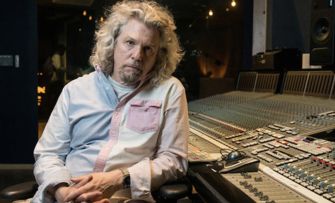
Bob Power, the acclaimed recording engineer and producer whose work helped define the sound of hip-hop and neo-soul in the late 1980s and 1990s, has died at the age of 73. His death was confirmed by the Clive Davis Institute of Recorded Music at New York University, where Power had been teaching for several years. According to a funeral listing, he died on March 1, though a cause of death has not been publicly disclosed.
Over a career spanning more than four decades, Power worked with some of the most influential artists in hip-hop, R&B, and soul, shaping the sonic identity of an era through his distinctive engineering style. He was particularly known for helping develop a richer low-frequency sound in hip-hop recordings, emphasizing deeper bass lines and crisp drum textures that became hallmarks of the genre’s early-1990s evolution.
One of Power’s most celebrated achievements was his work on engineering The Low End Theory by A Tribe Called Quest. Widely considered one of the most important hip-hop albums ever recorded, the project showcased Power’s ability to cleanly isolate samples while blending them with live-sounding drum and bass elements. The album’s warm, bass-heavy sound became a template for countless producers who followed.
Power’s résumé extended far beyond that landmark record. His engineering and production credits included work on Baduizm by Erykah Badu, Brown Sugar by D'Angelo, and De La Soul Is Dead by De La Soul. He also worked extensively with The Roots, contributing to albums such as Do You Want More?!!!??! and Things Fall Apart.
Tributes from artists across the music world followed news of his passing. Questlove, drummer and producer for the Roots, remembered Power as an intensely dedicated craftsman who approached audio engineering with enthusiasm and curiosity. In a social media tribute, Questlove recalled asking Power countless technical questions during studio sessions, describing him as an early mentor who helped shape how many musicians understood recording.
DJ Premier praised Power as one of the greatest engineers in hip-hop history, while Badu wrote that his guidance and mentorship had a lasting influence on her music. The outpouring of tributes emphasized not only Power’s technical skills but also his generosity toward younger artists and engineers.
Born in Chicago in 1952 and raised in the New York metropolitan area, Power began playing guitar as a child before studying classical composition and theory at Webster University in St. Louis. After graduating, he moved to San Francisco, where he pursued graduate studies while performing regularly as a jazz and rock musician. During this period, he also began composing music for television and other commercial projects.
In the late 1970s and early 1980s, Power worked a wide range of gigs while establishing himself in the music industry. After relocating to New York City in 1982, he supported himself by performing, producing commercial music, and engineering sessions for advertising clients.
His career took a major turn in 1984 when he was asked to temporarily fill in as an engineer at Calliope Studios. During that period, he worked with the hip-hop group Stetsasonic on their debut album On Fire. Impressed by his work, the group invited him to continue collaborating with them, launching his career in hip-hop production.
Through his connections at the studio, Power soon began working with emerging groups including A Tribe Called Quest, De La Soul, and Jungle Brothers, all central figures in the Native Tongues movement. Although both hip-hop and professional engineering were relatively new territories for him, Power approached the work as a creative puzzle rather than a rigid technical discipline.
His engineering philosophy focused on experimentation and collaboration with artists, emphasizing sonic clarity while preserving the raw energy of hip-hop sampling. The approach helped transform the genre’s studio sound during a period when producers were pushing the boundaries of what sampling technology could achieve.
Power continued to work steadily throughout the 1990s and 2000s, contributing to recordings by artists including Common, Talib Kweli, and J Dilla. His engineering work on Place Beyond the Pines earned a Grammy nomination for Best Engineered Album, while his contributions to Acoustic Soul were part of a project nominated for Album of the Year.
Even later in his career, Power remained active as both a collaborator and mentor. His recent credits included contributions to the posthumous album Forever and work on recordings by Meshell Ndegeocello and China Moses.
Colleagues say that beyond his professional accomplishments, Power will be remembered for his generosity and commitment to teaching the next generation of engineers and producers. His legacy remains deeply embedded in the sound of modern hip-hop and R&B, genres whose sonic foundations he helped build.