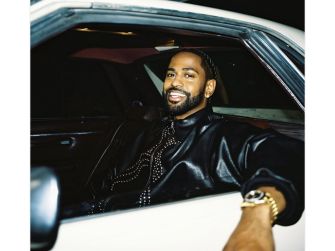
Big Sean has long spoken openly about his mental health, but in a new interview, the Detroit rapper is revisiting one of the darkest periods of his life and the decision to share it publicly.
In an upcoming episode of ABC News’ All Access, Big Sean sits down alongside Usher for a conversation with host Linsey Davis. In an exclusive clip, Davis asks the rapper what it felt like to address depression and therapy in a community where mental health is often considered taboo, particularly among Black men: “I was just sharing what was going on in my life,” he says. “I didn’t realize that I was being so vulnerable. I wasn’t trying to be a spokesperson for mental health per se. I was just expressing how I was going into therapy and experiencing a time of heavy ups and downs.”
That period began in the aftermath of the 2019 killing of Nipsey Hussle, the Grammy-nominated rapper and community activist who was shot outside his Los Angeles clothing store. Nipsey’s death reverberated across the music industry, but for Big Sean, it struck particularly close to home.
“I hit a wall,” he recalls. “And I either had to climb over it, or it was gonna fall on me and crush me.” Big Sean describes losing touch with himself amid the demands of his career. “I had been so about my work that I lost touch with the person that I was,” he says. “So I think that led to a very deep battle of depression, deeper than I experienced when I was a teenager.”
The artist, born Sean Anderson, has previously discussed struggles with anxiety and depression earlier in life. But he suggests this chapter felt more consuming, shaped by grief, exhaustion, and the pressure of constant productivity. “I had to take time away from the music industry being my first obligation,” he explains. “I had to put myself first.”
That decision translated into a significant pause in his recording output. After releasing Detroit 2 in 2020, Big Sean did not return with a full-length album until Better Me Than You, marking a four-year gap between projects, a notable stretch in an industry that often rewards relentless visibility.
During that time, therapy became central. So did something less tangible: relearning how to enjoy life outside of achievement.
“I was taking time to have fun,” he says, smiling. “You got to be serious about having fun, because as fast as time goes, we’re here for a limited amount of time.” It’s a perspective shaped not only by personal struggle but by loss. Nipsey Hussle’s legacy, rooted in self-determination, growth, and community uplift, remains a reference point in Big Sean’s reflections. The experience appears to have reframed his priorities.
While conversations around mental health have become more visible in hip-hop over the past decade, stigma persists. Big Sean’s willingness to speak candidly about therapy and depression contributed to a broader shift, even if he didn’t initially intend to lead it.
The full All Access interview is set to air on ABC News, offering further insight into a period that reshaped both his career trajectory and personal outlook.